*This post may contain affiliate links. As an Amazon Associate we earn from qualifying purchases.
13 Work at Home Productivity Tips
Do you work at home? Or, are you looking to start working from home? These tips for how to be productive working at home can help!
Working from home is amazing, but it can also be difficult if you have
If you are going to be successful at this working from home thing, then you need to know the best work at home productivity tips to ensure that you are as successful as you can be.
Work at Home Productivity Tips – How To Be Productive Working At Home
While these aren’t all the ways to be productive working at home, these are some of the top tips that you’ll want to implement to be the best you when working at home.

1. Set office hours
If you have read my other posts regarding working from home, I might be starting to sound like a broken record. Being sure to set office hours for your home office is one of the most useful tips I have ever heard though as it relates to entrepreneurship.
It helps you not burn out, it keeps you from wasting time and it allows you to continue to spend important time with family. This is important for work-life balance, which actually helps you to be more productive working at home during set hours.
2. Schedule breaks
Look at working from home like you would a regular job. You need to take regular breaks in order to remain refreshed and ready to work. Schedule in a lunch break
3. Buy an amazing chair
If you invest in any one thing for your home office, make it a great chair. Most people who work from home spend the majority of their time in front of a computer.
With an amazing chair, you are less likely to be uncomfortable or suffer from aches and pains that make you want to get up and away from your computer more often.
4. Turn off notifications
In order to prevent distractions, turn off notifications for your email and social media profiles. It helps, I promise.
Set limits and stick to them. When you are ready to dive into a project, set a limit for said project and STICK TO IT. (For example, if I need to write an article for an upcoming project, I will give myself 90 minutes to do it and then I work furiously for 90 minutes to complete that article.)
5. Set a schedule for your household work as well
If you work at home, you might find yourself easily distracted by household chores that need to be done. Make sure to do these chores in the mornings or in the evenings so that you aren’t tempted to leave your work projects in order to accomplish those.
Eat healthy and exercise. Keeping yourself healthy is a key component to making yourself the most productive that you can be. Be sure to get plenty of water too! Slacking on your diet and exercise can make you sluggish and tired.

6. Creating a Small Home Office to Stick to a Productive Day Schedule
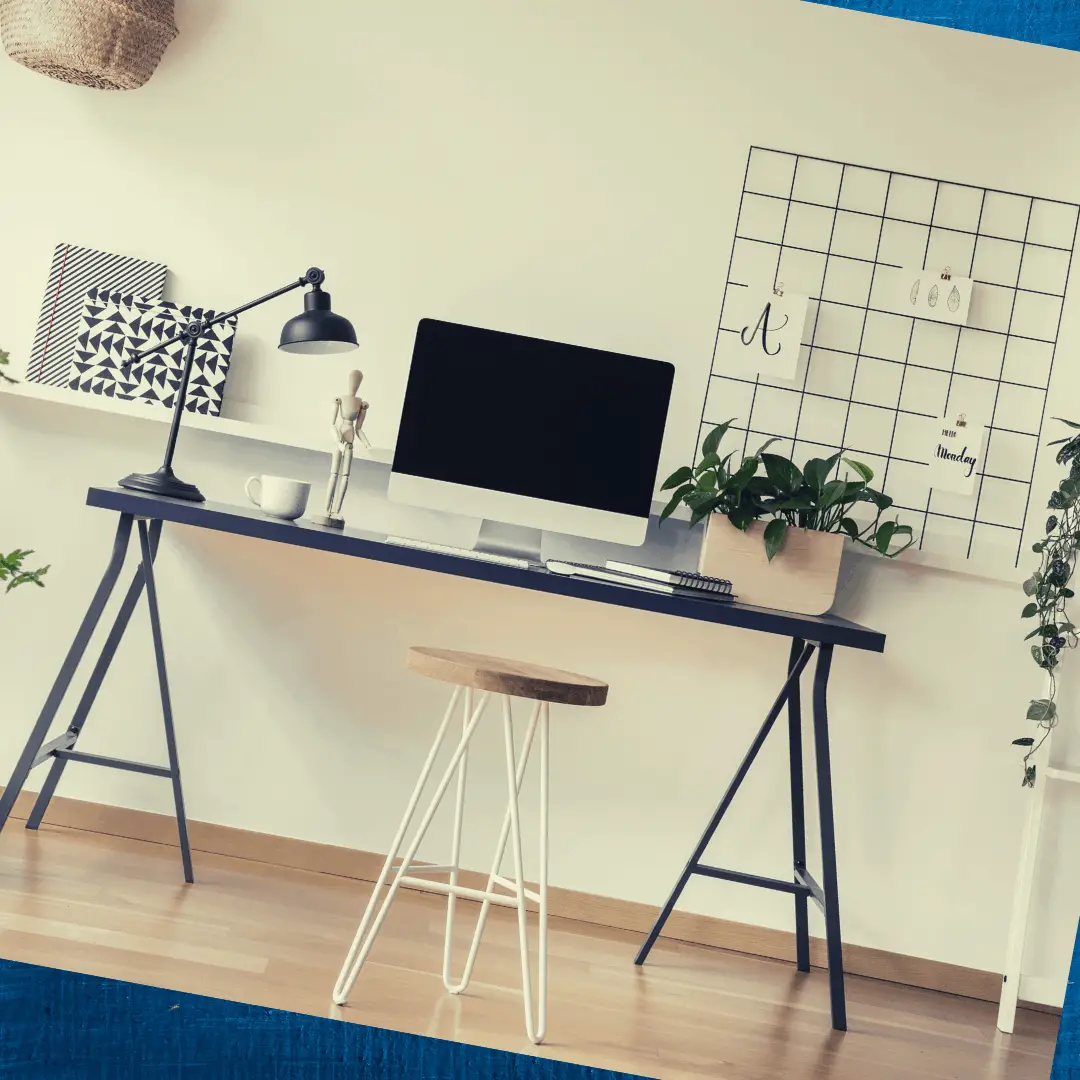
Are you trying to start a life in which you can effectively work from home? Creating a small home office and working from home offers many benefits and it is easy to see why you would want to do this.
Benefits of Working from Home
Let’s just take a look at a couple of the benefits of working from home:
- Flexibility. Working from home typically means that you can for the most part, set your own schedule.
- Save money. You will save money on gas by not having to commute to work. Additionally, you are able to save on daycare since you are able to be home with your kids.
- Save time. No more time wasted commuting to the office. For many of us, working from home means adding an extra hour or more to our days.
If you weren’t already planning to work from home, you probably are now after seeing all of these benefits, am I right?
The thing about working from home though is that you have to be organized enough to get your work done, motivated enough so that you don’t flake off and procrastinate on the things that need done, and you need to have the right home office space to make it all work.
How to be productive everyday in your small home office
Today we are going to talk about some steps that you can take that will help in creating a small home office:
7. Write it down
What do you absolutely need to make it a success? Write these things down right now so that you know the things that you have to get. Next, write down the things that you want to have in your office.
You can work with your space and your budget easier when it is written down and the true importance of each item is recognized. Also, include the space required for your needs.
Will you be meeting clients in this space? If you said yes, you will need more space than if it will be just you working in here alone.
8. Choose your space
Are you choosing between different areas of your home to put your office? Now that you have written down what all you need, you have a better idea of what space is required which should help you narrow down your options.
9. Get an organization system
Will you be working with paperwork and files? Maybe supplies? Look into the best storage options for your space. Maybe it will be a cube shelf or maybe it will be a file cabinet, or maybe just a desk with drawers will do.
Here is what I suggest though, pick a system that works for what you need, but also choose something that is aesthetically pleasing to you. If you aren’t comfortable in your space, it will make the focus more difficult.
10. Invest in your equipment
If you splurge on anything as it relates to your business, splurge on your equipment. Get the best equipment that you can afford so as to prevent any slowdown in your work. I’m a big believer that working from home doesn’t have to cost a lot of money, but definitely put some thought into where you put the money you do spend.

12. Brighten it up
Here’s the thing. Working from home is great, but it can actually get pretty lonely. Make sure that the space you choose for your office is brightly lit and decorated to your preferences. You don’t want it dark and dreary because that will make you seem even more lonely.
Great Tip for decorating and helping you be productive working at home is to print out some great quotes and frame them in old frames.
Great Read: Vision Boards for Financial Success!
13. Set “office hours”
Yes, working from home is great because you can set your own schedule, but for many of us, that means that we end up working too much.
Be sure to give yourself boundaries and set actual “office hours” so that you don’t burn out and so that you make sure to spend enough time with your family.
Being productive working at home also means time to turn it off when it’s time to end your work day, spend time with family, friends and your furbabies.
Do you work from home? How did you do in creating a small home office?
Home Office Ideas on a Budget to Help Make Every Single Day Productive
Lately we have been talking a bit about working from home and creating a small home office, but what if we are trying to create a small home office, on a strict budget? I’ve been there, my friends.
You know me, I like to do everything on a budget, and my adventures in working from home are no different. I have found quite a few great cheap office ideas to help keep my costs down and create a space that I love to work in.

Here are some of my favorite cheap office ideas:
- No office at all. Okay, honestly, I think we should all have a dedicated office space to work in. That being said, if you have no extra money and no space, you can simply grab a laptop and work where you sit! It can be done!
- Re-purpose. I love the look and the idea of repurposed furniture. I mean, why buy new when there is stuff out there that no one is using? Plus, when you re-purpose furniture, you can create exactly what you need with it. Whether you are repainting a desk to match your colors or you are turning an old dresser into a display piece that also stores your office supplies, you can create a masterpiece. Bonus: a quick scan through the Facebook Marketplace should provide you with most of the items that you can re-purpose for cheap or even free!
- Decorate on the cheap. Contrary to popular belief, wall art doesn’t have to cost you an arm and a leg. I have found some amazing decor pieces at thrift shops and yard sales for next to nothing. You can even go to discount stores such as Ross or TJ Maxx and find sweet clearance deals on art pieces. Or, if you have children, consider decorating your space with the art that your children have created for you. I was recently in someone’s office and found that the kids’ art on the walls gave it a friendly, personalized vibe. I loved it!
- Identify wants vs. needs. There may be plenty of things that you think you need for your office, that you really don’t need. Hang on, before you head out to shop for supplies, be sure that you spend a little bit of time identifying your wants vs. your needs. You will be glad that you did.
- Have set office hours. I have mentioned this in previous posts and here it is again, because it really is extremely important. Setting actual office hours will keep you from wasting time and money. The more productive you are with your time, the more money you will actually make.
- Stay organized. Sure, some of us can thrive in chaos, but that is generally the exception to the rule. The more organized you stay, the more productive you can be. This again, will save you money, because it allows you to be more productive thereby making more money!
Do you have a home office? What tips would you give to someone who was looking for cheap office ideas or someone looking for the most
If you have tips on how to be productive at home, share them with the rest of us!